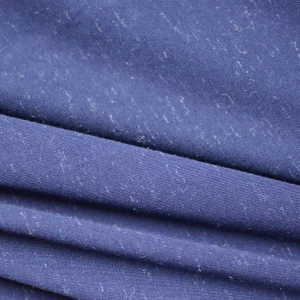
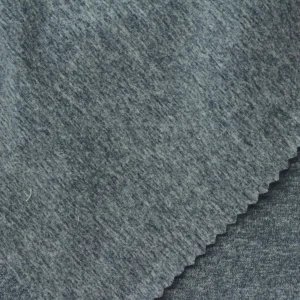
Direct knit manufacturingThe service route is confirmed by fabric category and buyer brief.
Single jersey is a direct knit manufacturing program at CZ Fabrics. Development starts from the required fiber blend, GSM, usable width, hand feel, color direction, and garment construction.
For a single jersey fabric manufacturer review, state whether the brief is for a T-shirt, base layer, dress, or active style, then define the stretch direction, color standard, finish, and buyer acceptance checks. The published families below are reviewed product records, not a factory-wide GSM or width range.
Garment factories and sourcing teams in Vietnam can compare the documented composition, GSM, width, and finish and send a specification for sampling review.
For buyers seeking a fabric supplier for Vietnam garment factories, CZ Fabrics applies the stated service model before coordinating the next development step.
How to specify single jersey fabric for manufacturing
Use the published families as starting references. Their values describe reviewed product records, not the full production range of the factory. Final construction, composition, weight, width, color, and finish are confirmed against the buyer brief and approved sample.
Table values come from the published product records and must not be read as minimum or maximum factory capability.
Decisions to include in the brief
Garment use and fit
State whether the fabric is for a T-shirt, base layer, dress, active style, or another buyer-defined garment, together with the intended fit and hand feel.
Weight and coverage
Provide the target finished GSM, tolerance, opacity or coverage expectation, and the drape required in the garment.
Stretch and recovery
Name the required direction, test method, condition, and acceptance limit. Do not rely on fiber content alone to define performance.
Color and finish
Send a Pantone reference or physical standard and identify brushing, printing, or any performance finish that requires review.
Construction context
Single jersey and interlock are different constructions. If structure is not fixed, send the target garment and a reference swatch so construction can be reviewed rather than inferred from the end use.
Brief: record construction, composition, finished GSM, usable width, color, finish, quantity, destination, and garment use.
Sample review: compare the proposed construction and hand feel with the approved reference, then record the measurements and open decisions.
Color and finish approval: confirm the color standard, dyeing or finishing scope, face and reverse appearance, and any required lab-dip or finish review before bulk release.
Bulk release: agree the final specification, tolerances, inspection method, acceptance limits, MOQ, and timing for this specific project. These commercial values are confirmed after the brief is reviewed.
Color, finishing and quality checks
GSM: define the conditioning or test method, measurement point, target, and tolerance.
Usable width: state open or tubular measurement, edge allowance, condition, and permitted tolerance.
Dimensional stability: specify the wash or treatment method, direction, condition, and buyer acceptance limit.
Appearance: compare the approved color standard, face and reverse surface, hand feel, and finishing result against the signed-off reference.
Questions buyers ask before sampling
How should I specify a single jersey fabric for a T-shirt or base layer?
State the garment use and fit, composition, finished GSM and tolerance, usable width, stretch direction, color standard, finish, quantity by color, destination, and buyer acceptance checks.
What is the difference between single jersey and interlock for sampling?
They are different knit constructions. If the construction is not fixed, send the garment reference, fabric cutting, target weight and width, and the criteria that will decide the sample.
Can a single jersey reference swatch be matched?
Send the physical cutting or technical reference with the required composition, GSM, usable width, color standard, hand-feel direction, and any stretch or dimensional checks so the proposed route can be reviewed.
Where are MOQ, lead time, testing, and certification details?
These are not published as blanket promises. They are confirmed for the specific construction, colors, quantity, test scope, and commercial route after the brief is reviewed.